Temple Street Night Market Food Guide 2027
Welcome to the definitive Temple Street Night Market food guide — the only stall-by-stall walkthrough you need before you set foot on the market's famous food strip. Temple Street (廟街) in Yau Ma Tei / Jordan, Kowloon, is Hong Kong's most atmospheric night market, and its food is the main event: over 20 food stalls and dai pai dongs clustered along the central section between Jordan Road and Kansu Street, serving everything from HK$8 curry fish balls to HK$400 whole spicy crab. This guide covers every must-try dish, the specific stalls worth your time, real 2027 price ranges, seating strategy, and the best time to arrive.
🍜 Food Guide Quick Facts
- Best Times: 6:00 PM - 10:00 PM for peak vendor activity and full range
- Best Season: October to March for comfortable walking weather
- Food Cost: HK$150-350 per person for a comprehensive tasting tour
- Payment: Small denomination HK$ notes preferred; most stalls are cash-only
- Seating: Shared plastic tables near the archway; arrive early for a seat
How to Use This Guide
This guide is written from the perspective of someone already standing at the market. Read it before you go, then use it on your phone while you walk. Every stall below is listed in walking order from the Jordan Road (southern) entrance toward the Kansu Street (northern) end — the direction most visitors naturally take once they exit Jordan MTR Station, Exit A.
The dishes below are organized by type rather than by stall, because several vendors specialize in one dish and you will want to build a route around your priorities. Prices are per portion and reflect what locals actually pay as of 2027; tourist-trap stalls on the market's outer edges can be 20-30% higher, so follow the crowd to the busy stalls where turnover is fast and prices are honest.
Street Snacks & Small Bites
Curry Fish Balls (咖哩魚蛋)
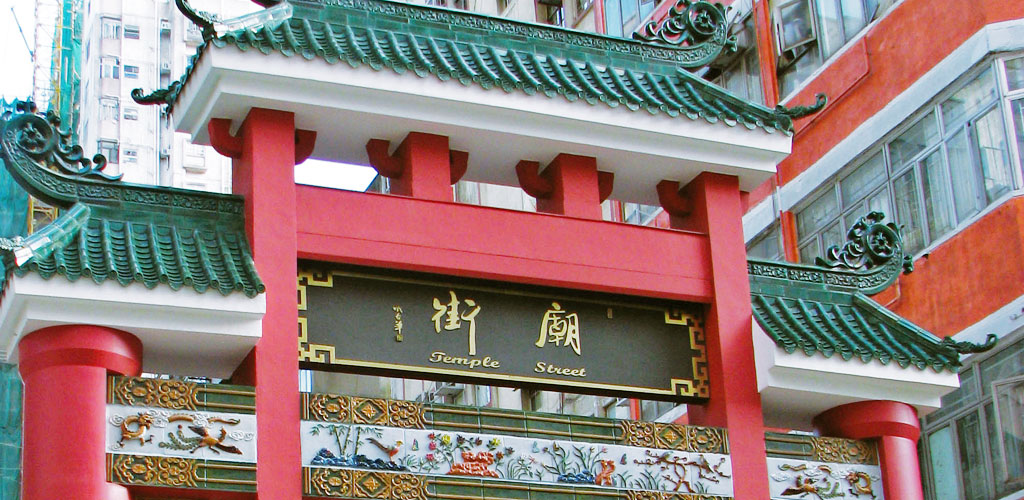
Price: HK$8-12 per stick (4-6 balls) | Where: The large steaming pots at the market's southern entrance, near the Temple Street archway
Hong Kong's most iconic street snack. Look for the vendors with big metal vats of bubbling curry broth — the best stalls keep the pot refilled constantly so the balls stay hot and the sauce stays fresh. Spicy and mild versions are usually both available; mild is the default if you don't specify. Eat them with the provided wooden skewers and watch for the chili oil at the bottom of the pot. This is the cheapest, fastest, and most reliable first stop — buy one stick to start, then come back for more once you know which vendor you like.
Satay Skewers (沙爹串)
Price: HK$10-18 per skewer (3-4 pieces) | Where: Grilled over open charcoal grills along the central food strip
Beef, chicken, and lamb skewers glazed in a sweet-savory satay sauce and grilled over charcoal. The best stalls char the edges slightly and baste continuously, which you can smell from several stalls away. Order a mixed skewer if you can't decide, and ask for extra satay sauce on the side — it's thick peanut-based and fills you up fast. Two skewers make a light meal for under HK$30.
Stinky Tofu (臭豆腐)
Price: HK$15-25 per portion | Where: Deep-fry stalls near the middle of the food strip, usually with a visible fryer
An acquired taste and a genuine local specialty. The tofu is fermented for several days, then deep-fried until the outside is crisp and the inside is silky, served with a sweet-spicy chili sauce. The smell is strong — that's the point, and locals consider it a sign of authenticity. Most vendors offer small portions for first-timers. If the smell bothers you, walk past; if you're curious, order the smallest size and eat it standing up, away from the seating area.
Egg Waffles (雞蛋仔 / Gai Daan Jai)
Price: HK$15-20 per portion | Where: Specialty stalls with the distinctive honeycomb-patterned iron; usually near the dessert end of the strip
Golden, bubble-shaped waffles cooked fresh in a special iron, crispy on the outside and soft and chewy inside. They're made to order, so expect a 5-10 minute wait during peak hours — that wait is normal and worth it. Original flavor is the classic; some stalls also offer chocolate, cheese, and matcha variations. Eat them hot, straight from the paper bag, and share if you're already full from savory stops.
Claypot Rice (煲仔飯) — The Temple Street Signature
Claypot rice is the dish Temple Street is genuinely famous for, and it is the one meal here that requires a time commitment. The restaurants that serve it are clustered around Woosung Street and the side streets just off Temple Street, and they cook each pot individually over charcoal or gas burners — expect 15-20 minutes from order to table. This is not fast food; it is the meal you sit down for, order a drink, and watch the crowd go by.
What to Order
Chinese Sausage & Preserved Meat (臘味煲仔飯): The classic. Lap cheong (sweet Chinese sausage), preserved duck, and sometimes wind-dried pork, layered over rice that gets crispy at the bottom — that crispy layer, called fan jiu (飯焦), is the part locals fight over. Price: HK$45-80 per pot.
Minced Pork & Egg: A cheaper, equally satisfying option. Ground pork with a raw egg cracked on top, stirred in at the last minute so it cooks from the pot's residual heat. Price: HK$35-55 per pot.
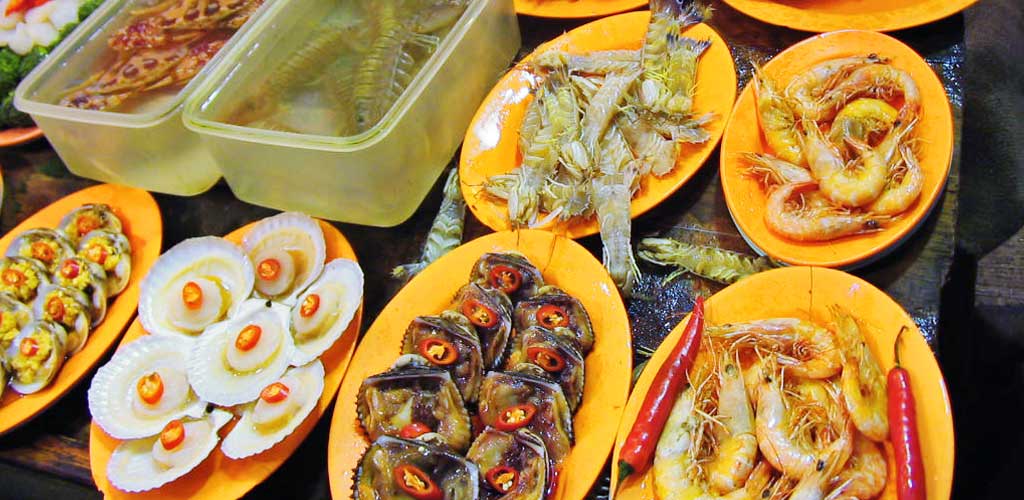
Seafood Claypot: Whole prawns, squid, and sometimes clams, with ginger and spring onion. More expensive but worth it on nights when you want something lighter than preserved meat. Price: HK$70-120 per pot.
• Order as soon as you sit down — the wait starts when you place it, not when you arrive
• The crispy bottom is the best part; don't scrape it all away
• Most places include free soup or tea; ask for jiu (soy sauce with oil) to drizzle on top
• These restaurants fill up after 7:30 PM; arrive by 7:00 for a guaranteed table
Dai Pai Dong Mains
Typhoon Shelter Crab (避風塘炒蟹)
Price: HK$200-400 per crab, depending on size | Where: Several seafood restaurants along the northern section near Kansu Street, with live crabs in tanks out front
The dish that made Temple Street famous in Hong Kong cinema. Whole crabs are stir-fried with copious amounts of minced garlic, dried chilies, and fermented black beans until the shell turns bright red and the sauce is caramelized. The best versions have more garlic than you think is reasonable — the garlic is the point. Order one crab per two people, and make sure the restaurant has live crabs in a visible tank; that's your quality indicator. This is the splurge dish of the night, and it is shared, not eaten solo.
Cart Noodles (車仔麵)
Price: HK$25-45 per bowl | Where: Cart noodle stalls in the central section, identifiable by the trays of toppings on display
The ultimate customizable cheap meal. You pick your noodle type (thick rice noodles, thin egg noodles, or instant noodles), your broth (curry, satay, or clear), and as many toppings as you want from a display of braised items: fish balls, beef brisket, pig skin, tofu puffs, vegetables, and sausage. Point at what you want if your Cantonese is limited — vendors understand pointing. A well-built cart noodle bowl with 3-4 toppings feeds you for under HK$40 and requires no knife or fork.
Seafood Congee & Noodle Soups
Price: HK$30-60 per bowl | Where: Soup-based stalls and small restaurants, often open earlier than the fried-food vendors
Several stalls serve congee (rice porridge) and noodle soups with toppings like shredded pork, century egg, fish fillet, and wonton. These are the late-night comfort options — the kind of thing you eat after 10 PM when the fried-food stalls are still going but you want something warm and restorative rather than heavy. Congee stalls are also the first to open, around 5-6 PM, which makes them useful if you arrive early.
Desserts & Drinks
Herbal Teas & Traditional Drinks
Price: HK$12-25 per bowl | Where: Specialized herbal-tea stalls, often near the dessert end or side streets
Temple Street has dedicated herbal-tea stalls serving leung cha (cooling herbal teas) like turtle jelly (ling chi), chrysanthemum, and sugar cane. These are bitter, medicinal drinks rooted in traditional Chinese wellness concepts — they're not sweet desserts, and locals drink them for their perceived health benefits. Turtle jelly is the most famous: a dark, slightly bitter gelatin served with honey or syrup on the side so you can sweeten it to taste. If you only try one traditional drink, make it this one.
Red Bean Soup (紅豆湯)
Price: HK$12-18 per bowl | Where: Dessert stalls, often sharing space with egg waffle vendors
Warm sweet red bean soup, sometimes with taro, lotus seed, or glutinous rice dumplings. It's a comforting, simple dessert that cuts through the richness of the savory dishes. Most stalls serve it hot; in summer, some offer a chilled version.
Coconuts & Fresh Fruit
Price: HK$15-25 per item | Where: Fruit stalls near the market edges
Whole fresh coconuts (sliced and served with a straw) and sliced mango, dragon fruit, and watermelon are widely available and make a refreshing, healthy counterpoint to the fried and saucy food. They're also useful if you're sharing dishes and need something palate-cleansing between bites.
Seating Strategy — Where to Eat
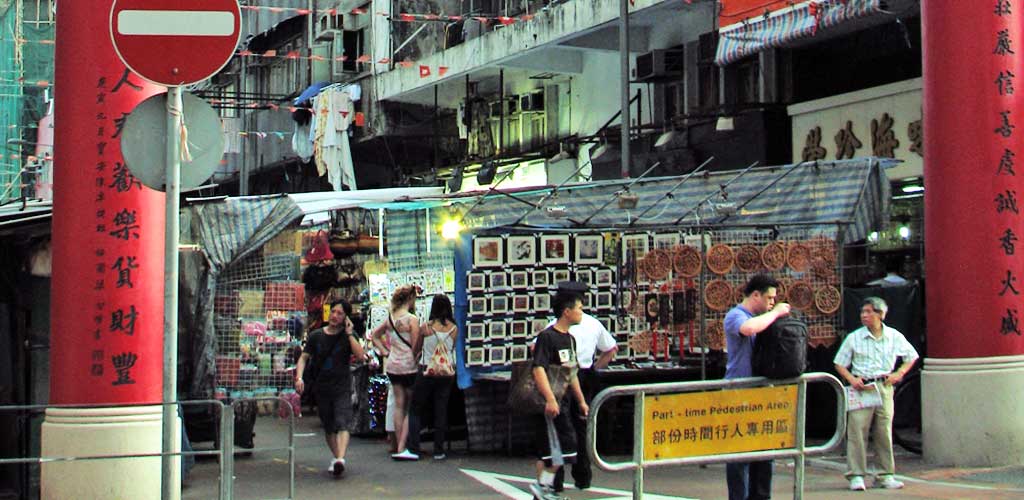
Temple Street seating is informal: shared plastic tables and stools set up in the middle of the street and in the side alleys, plus standing room at high counters outside some stalls. There are no reservations, no assigned tables, and no quiet corners. Here's how to handle it:
- The central seating area near the archway is the largest and most popular. Arrive by 6:30-7:00 PM to claim a table; after 8:00 PM you'll be eating standing up or on the curb.
- Woosung Street side alleys have smaller seating clusters in front of the claypot rice restaurants — quieter and better for the claypot meal, since you'll be waiting 15-20 minutes anyway.
- Standing at a stall counter is completely normal and often faster than finding a table. Street snacks like fish balls, satay, and egg waffles are designed to be eaten standing up with one hand.
- Bring wet wipes. Street food at Temple Street is eaten with your hands or simple utensils, and the tables are wiped down by vendors, not cleaned by staff.
Optimal Timing — When to Go
🕒 Timing Strategy for 2027
5:00 PM - 6:00 PM: Vendors set up. The earliest stalls (congee, soup, herbal tea) are open. Best time for photos — daylight fading into market lights, minimal crowds.
6:00 PM - 7:00 PM: The sweet spot. Full range of vendors, manageable crowds, and you can still get a table at the claypot rice restaurants. This is the recommended arrival window.
7:00 PM - 8:30 PM: Peak dining time. Maximum food variety and energy, but seating is scarce and lines form at popular stalls. Come hungry and have a snack (fish balls) on arrival while you hunt for a table.
8:30 PM - 10:00 PM: Cultural peak. Fortune tellers are busy, opera performers are out, and the atmosphere is at its best. Food remains plentiful, but some fried-food stalls start running low on popular items.
After 10:00 PM: Late-night mode. Fewer tourists, more locals. Congee, soup, and late-night noodle stalls are the main draw. Some vendors begin closing around 11:00 PM; the market itself stays lively until midnight or longer.
Food Safety & What to Expect
Temple Street food is generally safe, but street eating carries a few practical risks worth knowing about. The market is crowded, the food is handled in the open, and you will be eating with your hands. Here is what to keep in mind:
- Look for high turnover. The best indicator of freshness is a busy stall with a short line — food that sells fast is food that's been on the grill for less than an hour. A stall with a full display but no customers at 8:30 PM is a pass.
- Hot food should be hot. Curry pots, soup broths, and claypot rice should arrive steaming. If something has been sitting at room temperature, walk away. Lukewarm street food is where most stomach issues come from.
- Cash only, mostly. Very few stalls accept cards. Bring small-denomination HK$ notes and coins. ATMs are scarce near the market; withdraw before you arrive.
- Water is not free. Stalls sell bottled drinks, not tap water. Bring your own bottle if you want to stay hydrated without buying overpriced sodas.
- Spice levels are real. Curry fish balls and satay sauce can be genuinely spicy. Mild is the default assumption in most stalls, but ask if you are unsure — some vendors do not speak English well and will assume you want it hot.
- Hygiene is basic. Bring wet wipes and hand sanitizer. You will be eating skewers and finger food with hands that have been touching stall railings and crowd barriers.
Vegetarian & Dietary Options
Temple Street is not vegetarian-friendly in any systematic way, but there are options if you know where to look:
- Egg waffles are naturally vegetarian (confirm no lard in the batter).
- Curry fish balls are seafood, not meat — but the curry broth may contain shrimp or fish stock; ask.
- Cart noodles let you build a bowl from vegetables, tofu puffs, and egg noodles with clear broth — the safest customizable option.
- Coconuts and fresh fruit are the simplest reliable fallback.
- Claypot rice has vegetarian options (minced pork is not vegetarian; ask for egg and vegetable only, which most restaurants can do on request).
There are no dedicated vegetarian restaurants within the market itself. If you need more than a few safe snacks, eat elsewhere first and treat Temple Street as a tasting experience.
How to Read the Crowd
The market rewards following local cues. Here is how to navigate it like someone who has been before:
- Follow the locals, not the tour groups. Tour groups cluster near the archway entrance. The best stalls are one or two blocks deeper, where residents actually eat.
- The busiest stall at 9:00 PM is not necessarily the best stall at 7:00 PM. Peak-hour crowds can be driven by visibility and line length, not quality. Judge stalls at 6:30-7:30 PM, when informed choice is still possible.
- Look at what people carry away. If you see locals leaving a stall with multiple portions wrapped for takeout, that is a better signal than any sign.
- Vendors who are still setting up at 6:30 PM are usually the reliable ones. Vendors who arrive late or look disorganized are a risk.
Conclusion — Your Temple Street Food Night
Temple Street is not a restaurant district with reservations and fixed menus. It is a walking food market where the best meal is the one you build yourself, stall by stall, following your nose and the crowd. Start with curry fish balls at the archway, work your way north through satay and stinky tofu, sit down for claypot rice around 7:00 PM, and finish with egg waffles and a turtle jelly you will probably regret in the best way.
Bring cash, bring wet wipes, arrive before 7:00 PM if you want a table, and do not worry about getting it wrong. The best part of Temple Street is that nothing is expensive enough to be a real mistake. Eat widely, share everything, and let the market tell you what it wants you to eat.
For the full picture before you go, see our complete street food guide, the night market food tour guide, and the how to get there page for transport details.