Is Temple Street Night Market Worth It?
Yes, for one evening, if you come to eat and to watch the street rather than to shop. Temple Street is a licensed hawker market, not a staged attraction: entry is free, a dinner and a few snacks run from about HK$80 a head, and the stalls, the fortune tellers and the opera singers are all in the same few hundred metres. No, if what you want is clothes, bags and souvenirs by the armful — that is the Ladies Market in Mong Kok, whose pitches are licensed from noon.
The catch is the clock. The pitches are licensed to trade from 2:00pm, the street is closed to cars from 2:00pm, and the market nonetheless does not exist at 2:00pm. It fills through the afternoon, it is at its best from about 6:00pm, and the licensed trading stops at 11:00pm.
The decision, in one table
| Worth an evening if | Skip it if |
|---|---|
| You want Cantonese street food — claypot rice, seafood from the cooked food stalls, fish balls — at HK$10–200 a dish | You want to buy clothes, watches and souvenirs in volume; Tung Choi Street does that better |
| You can be there between about 6:00pm and 11:00pm, when the pitches are open and the street is full | You are passing through at 3:00pm and expect to find a market |
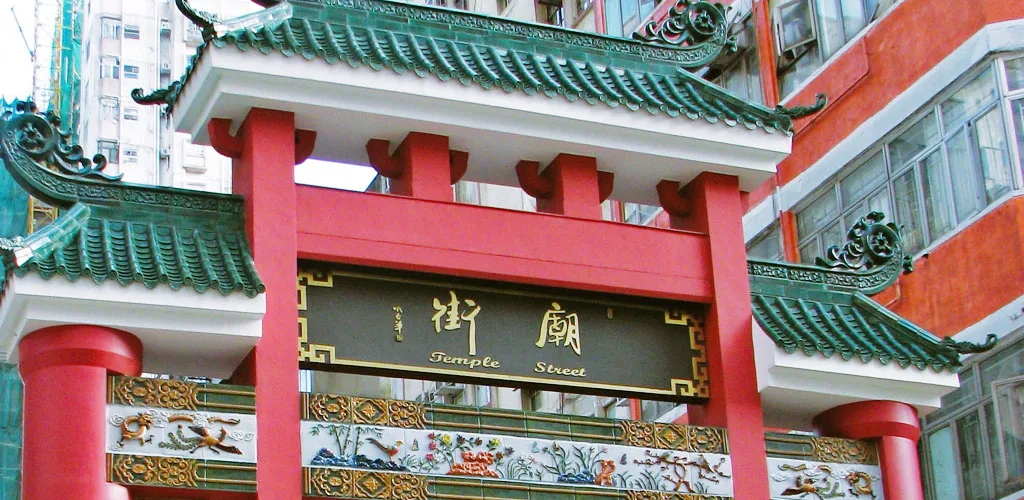
| You want the fortune tellers, the crowd and the informal opera near Tin Hau Temple, which is most of the reason to come | You want a ticketed attraction with a queue and a gift shop; there is no gate, no ticket and no show time here |
The clocks: a 2pm licence, a 6pm market, an 11pm close
Four clocks run on this street, and only one of them is the market.
| Clock | Window | Who sets it |
|---|---|---|
| Hawker pitches trade | 2:00pm–11:00pm for the morning-set-up stalls; 6:00am–11:00pm for the cabinet-type stalls | Food and Environmental Hygiene Department, pitch plan for the Temple Street Hawker Area |
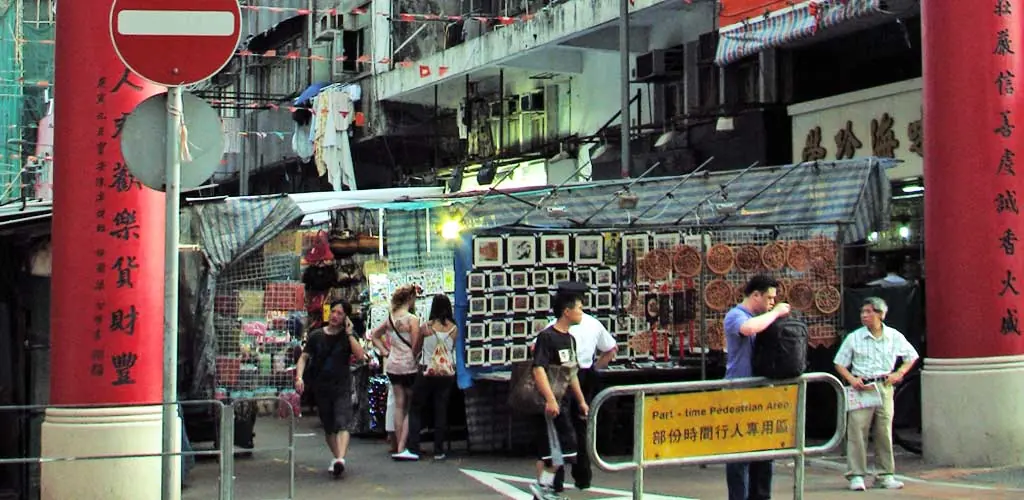
| Street closed to vehicles | 2:00pm–midnight, every day, between Jordan Road and Kansu Street | Transport Department, part-time pedestrian street since July 2002 |
| The street described as alive | around 6:00pm–11:00pm | Create Hong Kong, the government's film-location listing for the street |
| Restaurants and shops | their own hours, later than the pitches | licensed separately from the hawker pitches |
The 2:00pm start is a licence, not an opening bell, and it was set deliberately. In December 1998 the Urban Services Department counted the hawkers in the southern section between Kansu Street and Nanking Street and found that 11 per cent had opened between noon and 3:00pm, while 110 of them — 30.7 per cent — started from 4:00pm. The permitted start was moved from noon to 2:00pm the following month. That is why the licence and the market disagree: the rule opens at 2:00pm, and the 1998 count found the trade still arriving at 4:00pm.
So an afternoon arrival finds a licensed street with the pitches still setting up, not a market. From about 6:00pm the two clocks line up: stalls open, crowds out, fortune tellers working, opera singers near the temple. At 11:00pm the licence ends and the pitches pack down; the street itself stays closed to traffic until midnight, so that last hour is a lit pedestrian street rather than a market, with the restaurants along it keeping their own, later hours.
What an evening costs
There is no ticket and no gate: Temple Street is a public street and you pay stall by stall. The figures below are typical street prices — expect to pay about this much, not a published menu.
| What you buy | What it costs |
|---|---|
| Entry to the market | Free |
| Curry fish balls, five or six on a skewer | HK$10–25 |
| Claypot rice, street-wide | HK$65–95 a pot |
| Claypot rice at Hing Kee, Shops 12, 13A, 15, 17 and 19 Temple Street | the cheapest pot on the menu is HK$75 |
| Seafood from the cooked food stalls | HK$80–200 a dish, and up, depending on what you order |
| A crawl of five or six items in one evening | HK$150–250 per person |
| A fortune reading | per reader, and agreed before the reading starts; no fixed price is published |
| Cantonese opera near Tin Hau Temple | free; a tip is the convention |
Bring cash. The stalls are small, most take notes rather than cards, and some accept Octopus. The full list for the street, including the taxi tariff that gets you here, is on the fees page.
What you actually get
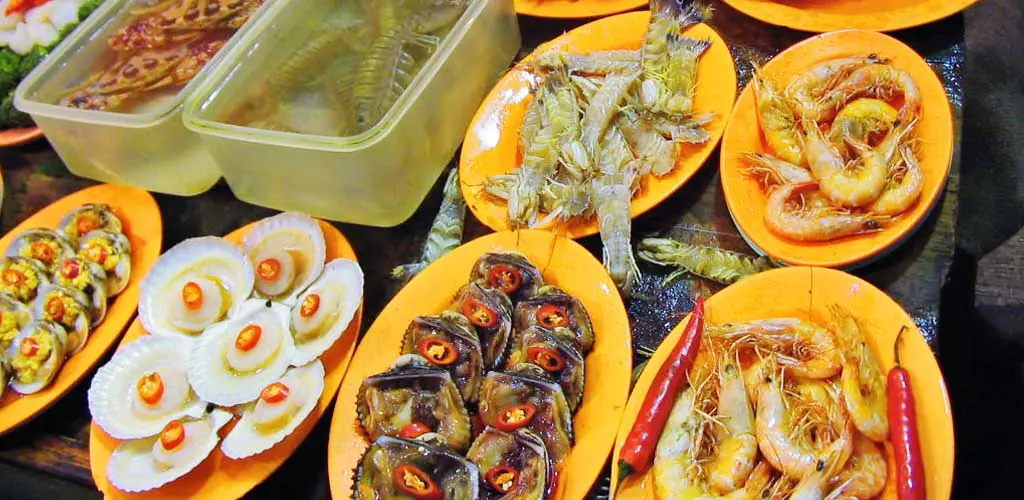
Food is the reason to come. Claypot rice cooked to a crust at the bottom, seafood stir-fried at the cooked food stalls and priced by what you point at, fish balls, skewers, and in the cooler months snake soup and hot pot. The heaviest concentration is the stretch up from the Jordan Road archway.
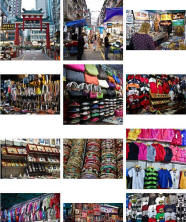
The merchandise half is real but thinner. Clothes, bags, watches, jade, electronics and souvenirs still line both sides of the street. Haggling is expected at the goods stalls — ask the price, offer less, and meet in the middle; food is fixed price, at the stalls and in the restaurants.
The street life is the attraction. Fortune tellers offering palm, face and bird readings work the middle of the street. Near Tin Hau Temple, informal Cantonese opera singers perform for whoever stops; listening costs nothing.
It is also a working street rather than a set. The Food and Environmental Hygiene Department licenses fixed pitches here — 42 morning-set-up stalls and 33 cabinet-type stalls in the central section between Pak Hoi Street and Kansu Street alone — and its current vacancy list shows 18 pitches standing empty between Nanking Street and Ning Po Street. Expect gaps between the stalls, ordinary shops trading alongside them, and a street that still belongs to Yau Ma Tei.
Is it still what it was?
Three documented changes explain most of the difference between the postcard and the street you walk down.
The trading day moved later. The southern section's permitted start was pushed from noon to 2:00pm in January 1999, because the hawkers were arriving in the afternoon anyway. The street has been an afternoon-and-evening market under its own rules for nearly three decades, not a market that starts at lunchtime and thins out.
The food section was rebuilt. In December 2023 the market opened a food section of 22 booths and 10 traditional-snack stalls on a 100-metre stretch between Jordan Road and Nanking Street, trading 2:00pm–11:00pm for six months to 14 June 2024, as part of the government's Night Vibes programme. That is the stretch most photographs are taken on.
Some pitches are empty. The vacancy list puts 18 pitches out of use on the Nanking Street–Ning Po Street stretch. A market with gaps reads very differently in a thin afternoon than in a full evening, which is why the arrival time decides whether the visit works.
The practical conclusion: what you get is a good food half, a thinner shopping half, and a genuinely busy street from about 6:00pm until the pitches close at 11:00pm. If you want the version people mean when they say "Temple Street", come for that window rather than for an afternoon.
Temple Street or the Ladies Market?
They are not the same purchase, and the choice takes about ten seconds.
| Temple Street, Yau Ma Tei and Jordan | Ladies Market, Tung Choi Street, Mong Kok | |
|---|---|---|
| What it is for | Food, street life, fortune tellers, opera | Cheap clothes, bags, accessories and souvenirs |
| Stall hours | 2:00pm–11:00pm, the licensed hawker trading window | 12:00 noon–11:00pm, the hours printed on all four pitch plans |
| Closed to traffic | 2:00pm–midnight, every day | 4:00pm–midnight Monday to Saturday; 12:00 noon–midnight on general holidays |
| Pick it if | You want to eat and watch | You want to shop, or you are starting in the afternoon |
The two are two stops apart on the Tsuen Wan line, Jordan to Mong Kok, so one evening can carry both: shop in Mong Kok from 4:00pm, ride two stops south and eat on Temple Street from 7:00pm. Which one to pick at which hour, and what each costs, is set out in the Temple Street and Mong Kok market comparison.
Getting there, and getting home
Two MTR stations sit at either end of the street, both on the Tsuen Wan line and both a few minutes' walk from the stalls: Jordan, Exit A, at the southern archway end, and Yau Ma Tei, Exit C, at the north end. The how to get here guide has both walking routes, and the opening hours page has the daily rhythm in full.
The trip home is the part that catches people, because the pitches close at 11:00pm and the last trains from both stations are not far behind. An overnight bus, the N122, runs the length of Nathan Road after that, and a metered taxi starts at HK$29 on the flag. The getting home guide has the last departure from each platform, the five-minute gate rule and the full taxi tariff.
Questions people ask
Is entry free?
Yes. Temple Street is a public street, the pitches are licensed stalls, and there is no ticket, gate, timed slot or booking. You pay stall by stall.
What time should I arrive?
Between about 6:00pm and 11:00pm. The licence opens at 2:00pm and the street is car-free from 2:00pm, but the pitches fill through the afternoon, and licensed trading ends at 11:00pm.
What happens after 11:00pm?
The pitches stop trading at 11:00pm. The street stays closed to vehicles until midnight, and the restaurants and shops along it keep their own, later hours.
Do the stalls take cards?
Mostly they take cash. Carry small notes, and treat Octopus as a bonus rather than as a plan.
Can you bargain?
At the goods stalls, yes: ask the price, offer less, and meet in the middle. Food is fixed price, both at the stalls and in the sit-down restaurants.
Sources
Every source below was read on 21 November 2026.
| Fact on this page | Source |
|---|---|
| Pitches trade 2:00pm–11:00pm (morning-set-up) and 6:00am–11:00pm (cabinet-type); 42 and 33 pitches in the Pak Hoi Street–Kansu Street section | Food and Environmental Hygiene Department, location plan YT-TE-PK (PDF) |
| Street closed to vehicles 2:00pm–midnight daily since July 2002, between Jordan Road and Kansu Street | Transport Department, Pedestrian schemes for Jordan |
| "Alive with activities from around 6pm to 11pm" | Create Hong Kong, Film Promotion and Facilitation Section, Temple Street location listing |
| 11 per cent open between noon and 3:00pm; 110 hawkers (30.7 per cent) from 4:00pm in December 1998; permitted start moved from noon to 2:00pm | HKSAR Government press release, 22 January 1999, Revised trading hours for Temple Street hawker bazaar |
| 18 vacant pitches between Nanking Street and Ning Po Street, listed at 1400–2300 | Food and Environmental Hygiene Department, vacant fixed hawker pitches |
| Fish balls HK$10–25 for five or six; claypot rice HK$65–95 a pot; five or six items HK$150–250 per person; mostly cash | hongkong-trip.com, Hong Kong street food guide |
| A dinner and a few snacks from about HK$80 a head | hongkong-trip.com, Temple Street Night Market guide ("dinner around HKD 80–200 per person") |
| Hing Kee's cheapest claypot pot HK$75, 44 years on Temple Street, five shops | Sing Tao Daily, 廟街老字號興記菜館面臨「無人肯煲飯」, 15 August 2026 |
| Seafood HK$80–200 or more a dish | hongkong-trip.com, Dai pai dong guide |
| Ladies Market closed to traffic 4:00pm–midnight Monday to Saturday and 12:00 noon–midnight on general holidays, on Tung Choi Street between Argyle Street and Dundas Street | Transport Department, Pedestrian schemes for Mong Kok |
| Ladies Market pitches trade 12:00 noon–11:00pm | Food and Environmental Hygiene Department, Tung Choi Street location plan MK-TCS-AN (PDF) |
| December 2023 food section: 22 booths and 10 traditional-snack stalls, 2:00pm–11:00pm, until 14 June 2024, 100-metre stretch between Jordan Road and Nanking Street | The HK HUB, Revamped Temple Street Night Market unveiled, 18 December 2023 |
| Red urban taxi flagfall, first 2 kilometres | Transport Department, Taxi fare of Hong Kong |
| Overnight bus N122, Shau Kei Wan to Mei Foo, along Nathan Road | Citybus route record published through the Government's data portal, N122 route |
Opening hours and last trains for the two stations are kept current on the opening hours page and the getting home guide.